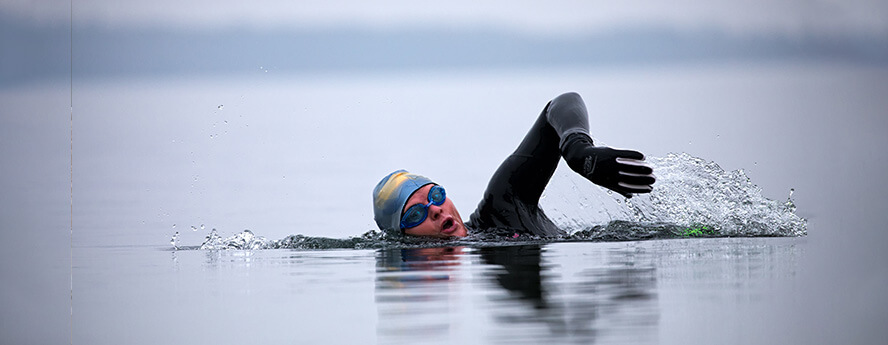
Despite the popularity of cold water swimming, it still seems rather challenging to persuade newcomers into the water. No matter how serene and beautiful lakes and waterfronts are, the idea of plunging oneself into a waterscape of chilly, even frozen, waters is simply not something many will consider. The question then becomes, why does the activity continue to grow?
The details that most often persuade individuals are related to health. This is because cold water swimming has become renowned for its mental and physical health benefits, as has been an infamous champion by the likes of Wim Hoff. For those curious about these benefits, we’re sharing some of the international cold water swimming community’s most celebrated insights as to how taking the chilly plunge can improve your wellbeing.
Boosts Mood
The most obvious benefit of cold water swimming is one that can be spotted among swimmers the moment they return to dry land: happiness. In the same way that runners report obtaining a runner’s high, cold water swimmers receive a rush of adrenaline after a swim, an elevated mood caused by the sudden rush of serotonin and dopamine that flood the body.
This mood boost is not only a temporary occurrence either, with many swimmers reporting their mood being lifted throughout the day.
Improved Circulation
The science behind improved circulation of cold water swimmers isn’t complicated. By suddenly and temporarily submerging one’s body into cold water for a short period of time, blood vessels constrict and blood pressure increases. This short stressor actually helps to invigorate the body, reducing inflammation and improving heart strength.
Promising you are carrying your changing robe, this shock to the system can be quickly balanced, with individuals warming up and drying off, enjoying the lasting benefits of an intense workout, such as an ongoing lower level blood pressure.
Immersion In Nature
Distance from nature correlates with depression and stress, with the opposite also being demonstrated as true. This means that those who spend a greater amount of time in nature are generally happier and healthier overall. As such, swimmers will find themselves more likely to see improved mental health benefits as they take their activity into the wild over the confines of an indoor swimming pool.
So-called blue spaces also have their own advantages, with evidence demonstrating that individuals tend to see their mood boosted and stress lowered when spending time near bodies of water, such as rivers, lakes, and oceans.
Connecting With Communities
Cold water swimming, especially in the sea, isn’t without its risks, which is why many swimmers tend to jump in with others. While this safety consideration is fundamental to good practice, many also seek out swimming communities for the health benefits of socialization.
Many studies demonstrate that spending time with others, as well as feeling a part of a group, can be empowering, instilling a great deal of confidence. If you haven’t already found a local swimming group, be sure to check your social media groups and, if there’s nothing there, simply heading down to the water is a great way to spot the regulars!
